










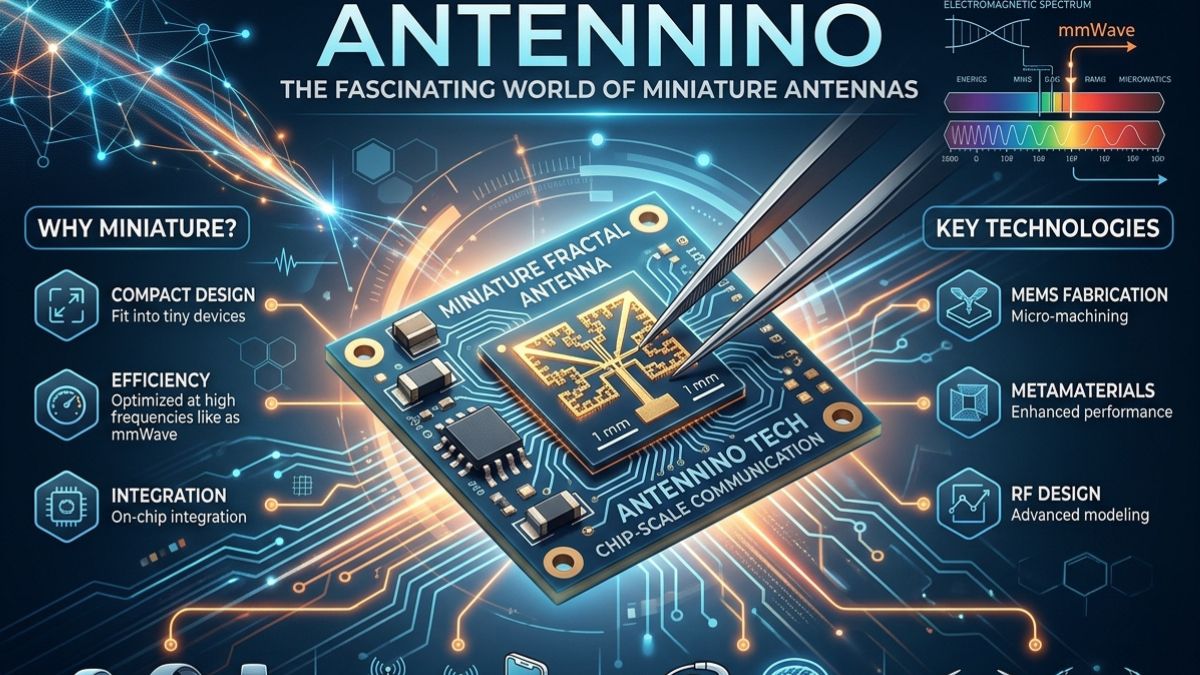
Welcome to the captivating realm of Antennino, where miniature antennas take center stage. These tiny wonders play a pivotal role in our increasingly connected world. Whether you’re tuning into your favorite radio station or streaming videos on your smartphone, chances are you’ve benefited from their ingenious design.
But what exactly is Antennino? It’s more than just a trend; it’s an innovation that has transformed how we communicate and interact with technology. As devices become smaller and more portable, the need for efficient communication solutions grows. Miniature antennas have emerged as the unsung heroes behind this evolution.
Join us as we explore the fascinating history, diverse types, and exciting future of Antennino! From DIY projects to practical applications, there’s so much to discover about these remarkable tools that keep us linked together in ways we’ve only begun to imagine. Let’s dive in!
History and Evolution of Miniature Antennas
Miniature antennas have come a long way since their inception in the early 20th century. Initially, antennas were large and cumbersome, designed for powerful transmitters. As technology progressed, so did the need for smaller devices that could still deliver performance. The 1960s marked a turning point with advancements in materials and fabrication techniques. Engineers began exploring various designs, leading to compact structures like patch and chip antennas. These innovations allowed antennas to be integrated into mobile devices.
The rise of wireless communication fueled further evolution in antenna design. The demand for portability drove researchers to experiment with new configurations that would fit seamlessly into everyday electronics. Today’s miniature antennas are not just functional; they’re also highly efficient. With applications ranging from smartphones to IoT devices, these tiny marvels continue to play a crucial role in modern connectivity and communication technologies.
Types of Antennino and Their Uses
When exploring Antennino, it’s important to recognize the various types available and their specific applications. Each type is designed for different environments and purposes. Patch antennas are compact and ideal for devices like smartphones or IoT gadgets. Their low profile makes them perfect for limited space while delivering strong performance. Dipole antennas offer versatility in both transmission and reception. They’re commonly used in radio communications, providing good coverage with simple construction.
Helical antennas stand out due to their unique shape. These are often utilized in satellite communication because of their ability to maintain signal integrity over long distances. Microstrip antennas combine efficiency with a sleek design. They find homes in modern electronics where aesthetics matter alongside functionality. Each type of Antennino serves distinct needs, making it essential to choose wisely based on your specific requirements.
Advantages of Using Miniature Antennas
Miniature antennas, or Antennino, offer several compelling benefits. First and foremost, their compact size allows for seamless integration into various devices without compromising aesthetics. These small wonders provide excellent performance despite their dimensions. With advancements in technology, they can achieve high gain levels comparable to larger antennas.
Their lightweight design makes them ideal for portable applications. This is particularly advantageous in mobile devices where weight and space are critical factors.
Miniature antennas also excel in versatility. They can be used across different frequency bands, making them suitable for everything from IoT devices to consumer electronics. Moreover, the ease of installation adds another layer of convenience. Whether you’re an engineer or a hobbyist, integrating these antennas into your projects is straightforward and user-friendly. Cost-effectiveness cannot be overlooked; as production techniques improve, miniature antennas become more affordable while maintaining high quality and reliability.
How to Choose the Right Antennino for Your Needs
Choosing the right Antennino can seem daunting, but it’s essential for optimal performance. Start by assessing your specific requirements. Are you looking for better reception at home or a portable solution for outdoor activities? Next, consider the frequency range you need. Different antennas cater to various bands, so make sure the one you choose aligns with your devices.
Size matters as well; miniature antennas are designed to be compact yet powerful. Ensure that the chosen model fits comfortably in your space without compromising efficiency. Don’t forget to look into compatibility with existing gadgets and systems too. This will save you time and frustration later on. Read reviews from other users to identify potential issues or advantages that may not be immediately apparent. A little research goes a long way in securing an antenna that meets all your needs effectively.
DIY Projects with Miniature Antennas
DIY projects with miniature antennas open up a realm of creativity and innovation. These tiny devices can enhance various applications, from simple radio receivers to sophisticated drones. One popular project involves creating a homemade FM transmitter. With basic components and a small antenna, you can broadcast your favorite tunes to nearby radios. It’s an exciting way to explore the basics of wave propagation. Another fun idea is building a mini satellite dish for Wi-Fi reception. By repurposing materials like aluminum foil or plastic bowls, you can significantly boost signal strength at home or in the office.
For tech enthusiasts, integrating miniature antennas into robotics adds functionality. Whether it’s remote control cars or autonomous robots, these antennas enable better communication and navigation capabilities. The beauty of DIY projects lies in customization. Experimenting with different designs allows hobbyists to find what works best for their unique setups while learning about antenna theory along the way.
The Future of Miniature Antennas
The future of miniature antennas, or Antennino, is brimming with possibilities. As technology advances, these tiny devices will become even more efficient and versatile. Innovations in materials science could lead to lighter and more durable designs. Integration with smart devices will be a game changer. Imagine wearable technology that seamlessly connects to the Internet without sacrificing performance. Miniature antennas are poised to play a crucial role in enhancing connectivity for IoT applications.
Moreover, advancements in 5G and beyond will demand higher bandwidth capabilities from these small structures. Researchers are exploring antenna arrays that can adapt dynamically to changing environments. Sustainability also stands at the forefront of future developments. Eco-friendly manufacturing processes might emerge as industries push for greener alternatives. As we look ahead, it’s clear that Antennino will continue shaping communication technologies while meeting evolving consumer needs.
Conclusion
The world of Antennino offers a captivating glimpse into the evolution and utility of miniature antennas. From their historical origins to modern applications, these compact devices have transformed how we communicate and interact with technology. Each type serves a unique purpose, showcasing an impressive range that caters to various needs.
Choosing the right Antennino involves understanding your requirements—whether for personal projects or professional use. The advantages are clear: they save space, enhance portability, and often provide superior performance compared to larger counterparts.
For those interested in hands-on creativity, DIY projects with miniature antennas open doors to innovation. Building your own can deepen your understanding while allowing you to customize based on specific needs.