










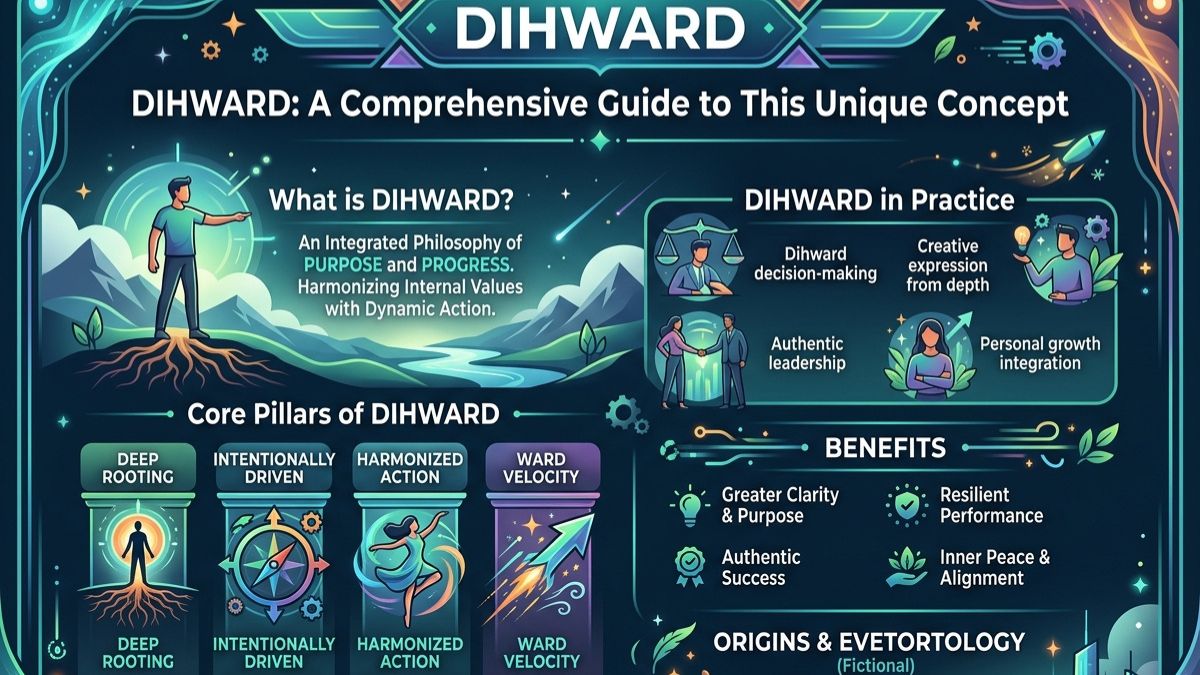
Have you ever stumbled upon a concept that feels both intriguing and innovative? Dihward is one such idea, blending creativity with practicality in ways that can transform everyday experiences. This unique approach encourages individuals to rethink their methods and perspectives, opening doors to new possibilities. Whether you’re curious about enhancing your personal life or seeking fresh strategies for problem-solving, understanding Dihward could be the key to unlocking your potential. Dive into this comprehensive guide as we explore its origins, workings, benefits, and real-life applications that might just inspire you to embrace Dihward’s in your own journey.
What is Dihward?
Dihward is a fresh concept that invites individuals to approach challenges from new angles. It encourages creative thinking and innovative solutions, making it particularly appealing in today’s fast-paced world. At its core, Dihward emphasizes the importance of adaptability. Rather than sticking to traditional methods or rigid frameworks, it promotes flexibility in thought processes and actions. This allows for breakthrough ideas to emerge when faced with obstacles.
The term itself may not be widely recognized yet, but its essence resonates with those seeking change. Whether applied in business strategies or personal development, Dihward serves as a guiding philosophy for navigating complexity creatively. As we delve deeper into this intriguing notion, you’ll discover how embracing Dihward’s can lead to transformative experiences across various aspects of life. It’s all about reimagining possibilities and turning challenges into opportunities for growth.
The History and Origins of Dihward
Dihward traces its roots back to ancient practices that emphasized community collaboration. Its origins lie in cultural traditions where individuals came together for mutual benefit and support. Over centuries, these communal gatherings evolved into organized systems. They became a way for people to pool resources and share knowledge. The principles of Dihward’s reflect this deep-seated belief in collective effort.
In more recent times, the concept was revitalized amidst modern challenges such as urban isolation and economic disparity. Innovative thinkers recognized the potential of harnessing local talent and fostering connections within neighborhoods. As societies increasingly value sustainability, Dihward’s has gained traction as a viable solution for addressing contemporary issues while honoring historical practices. This unique blend of past and present continues to resonate with those seeking a sense of belonging in today’s fast-paced world.
How Does Dihward Work?
Dihward’s operates on a foundational principle of community engagement. It connects individuals based on shared interests or goals, fostering collaboration and creativity. At its core, Dihward utilizes an interactive platform where users can create profiles. These profiles highlight skills, projects, or ideas they wish to explore further. Once connected, members can engage in discussions, share resources, and collaborate on initiatives that resonate with them. This creates a dynamic environment for innovation.
The system also incorporates feedback loops. Users provide insights into their experiences which helps refine the process over time. Additionally, Dihward often features tools designed to facilitate project management and communication among peers. This ensures that everyone stays aligned toward common objectives while respecting individual contributions. It’s about building relationships that empower all participants to achieve more together than they would alone.
Benefits of Using Dihward
Using Dihward’s brings several advantages to those who embrace it. First and foremost, it fosters a sense of community among users. This shared experience often leads to increased collaboration and creativity. Another notable benefit is its adaptability. Whether you are an individual looking for personal growth or part of a larger organization aiming for efficiency, Dihward can be tailored to meet diverse needs.
Moreover, implementing Dihward can enhance productivity. The structured approach encourages focus and reduces distractions, allowing users to achieve their goals more effectively. Additionally, the use of Dihward’s promotes accountability. Participants are more likely to stay committed when they know others are involved in the journey with them. Many users report heightened motivation as they engage with Dihward’s unique framework. This boost in enthusiasm can make all the difference during challenging times or when tackling complex tasks.
Potential Drawbacks of Dihward
While Dihward offers many advantages, it’s essential to consider its potential drawbacks. One notable concern is the learning curve involved. For newcomers, grasping this concept can be challenging and may require a significant investment of time. Another issue is scalability. As Dihward’s expands, maintaining quality control becomes complex. If not managed properly, this could lead to inconsistencies in user experience or outcomes.
Additionally, reliance on technology raises questions about accessibility. Not everyone has equal access to digital platforms that facilitate Dihward’s implementation. There can be resistance from traditionalists who prefer established methods over innovative concepts like Dihward. This pushback might hinder broader acceptance within certain communities or industries. Understanding these challenges allows for more informed decision-making when considering whether to engage with Dihward effectively.
Real-life Examples and Success Stories
Dihward’s has transformed lives across various sectors. One standout example is a small community in Arizona that adopted this concept to enhance local engagement. Residents collaborated on projects, revitalizing public spaces and increasing neighborhood pride. In another instance, a tech startup utilized Dihward principles to streamline team communication. This led to improved productivity and innovation within just months of implementation.
Educational institutions have also embraced Dihward. A school district in Illinois integrated it into their curriculum, fostering teamwork among students while enhancing problem-solving skills. These success stories illustrate the adaptability of Dihward’s in diverse environments. Each case demonstrates how embracing this unique concept can drive positive change and foster stronger connections among individuals or groups.
Is Dihward Right for You?
Determining if Dihward’s is suitable for you involves reflecting on your personal goals and lifestyle. If you’re seeking a fresh approach to productivity or community engagement, this concept may resonate. Consider how Dihward aligns with your values. Are collaboration and innovation important to you? This framework thrives in environments where these traits are encouraged.
Your willingness to adapt is also crucial. Dihward often requires flexibility and open-mindedness, so be prepared for a shift in perspective. Evaluate the resources available to you as well. Do you have access to communities or platforms that support Dihward’s practices? If so, this could enhance your experience significantly. Think about your long-term objectives. Is integrating Dihward into your routine likely to help you achieve them? Reflecting on these questions will guide you toward making an informed decision about embracing this unique concept.
Conclusion
Dihward represents a fascinating concept that merges creativity with practicality. Its roots are deeply embedded in history, showcasing how cultures adapt to their environments and needs over time. Understanding its mechanics reveals not just how Dihward functions but also the myriad of benefits it can offer.
The advantages of incorporating Dihward into your life or business practices are compelling. From increased efficiency to fostering collaboration, this unique approach has proven successful for many individuals and organizations alike. However, like any system, it’s essential to acknowledge potential drawbacks as well. Recognizing these challenges allows for more informed decisions when considering Dihward.
Real-life examples illustrate the transformative power of adopting this concept. Success stories abound from various sectors where embracing Dihward led to significant improvements in processes and outcomes.