










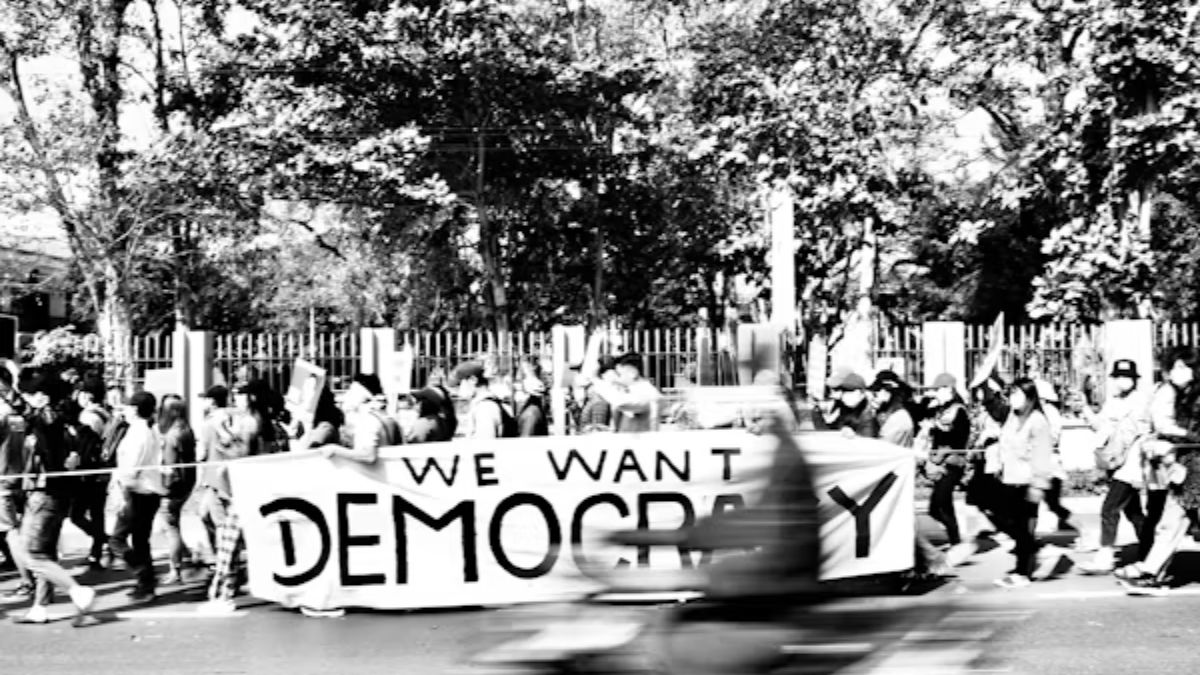
In a world where the balance between freedom and oppression hangs by a thread, the clash between fascism and democracy is more relevant than ever. These two ideologies represent not just political systems but fundamental beliefs about human rights, individual liberties, and societal structure. As we navigate through history’s shadowy past and its echoes in our current society, it’s crucial to understand what fascism truly means and how it stands in stark opposition to democratic values. The struggle for freedom is ongoing, shaping our lives today as much as it did decades ago. Join us on this journey to explore the complexities of these conflicting ideologies and their impact on global politics — because understanding this battle can empower us all to defend our freedoms against rising tides of authoritarianism.
Historical background of fascism and its rise in Europe
Fascism emerged in the early 20th century as a reaction to political instability and economic turmoil in Europe. Following World War I, many nations faced social unrest and dissatisfaction with existing democratic governments.
In Italy, Benito Mussolini capitalized on this discontent, founding the Fascist Party in 1919. He promised national rejuvenation through authoritarian rule and aggressive nationalism. His rise inspired similar movements across Europe.
Germany soon followed suit with Adolf Hitler’s National Socialist German Workers’ Party (Nazi Party), which gained traction amid widespread unemployment and inflation during the Weimar Republic era. Propaganda played a crucial role in promoting fascist ideologies, appealing to public fears and desires for strong leadership.
Other countries like Spain also saw the emergence of fascist elements, particularly under Francisco Franco’s regime during its Civil War. This period marked a significant shift towards totalitarian governance across various European states.
Key characteristics and principles of fascism
Fascism is characterized by an authoritarian regime that seeks to centralize power. It often emphasizes the supremacy of the state over individual rights and freedoms. This can lead to the suppression of dissent and opposition.
Another defining principle is nationalism, where loyalty to one’s nation or ethnic group becomes paramount. This ideology cultivates a sense of unity but can also breed exclusionary practices against those deemed ‘outsiders.’
Additionally, fascist movements typically glorify militarism and promote aggressive expansionism. The idea of strength through discipline resonates strongly within these regimes.
Propaganda plays a crucial role in shaping public perception, creating a distorted reality that supports their agenda while demonizing opponents. These elements combine to create a rigid societal structure, stifling creativity and freedom in favor of uniformity and control.
Comparison with democratic values and systems
Fascism and democracy stand on opposing sides of the ideological spectrum. While fascism emphasizes authoritarian control and a single-party state, democracy thrives on pluralism and individual freedoms.
Democratic systems are built on the principles of equality, where citizens have a voice in governance through free elections. This participation fosters accountability among leaders.
In contrast, fascist regimes often suppress dissenting opinions and manipulate public perception through propaganda. The lack of transparency erodes trust within society.
Moreover, democratic values celebrate human rights as fundamental pillars. Fascist ideologies frequently disregard these rights for nationalistic goals or social order.
The stark differences highlight the importance of safeguarding democratic institutions against encroaching authoritarian tendencies that resemble those seen under fascist rule throughout history. Embracing diversity stands central to democracy’s strength—something that fascism inherently rejects.
The impact of fascism on society and individual rights
Fascism profoundly impacts society and individual rights, fascisterne often undermining both. Under fascist regimes, personal freedoms are stripped away in the name of national unity. Dissent is silenced; voices that challenge authority face severe repercussions.
This suppression leads to a climate of fear where people hesitate to express their opinions. Media becomes heavily controlled or censored, manipulating information to serve state propaganda.
Socially, fascism fosters division and animosity among groups. It promotes an “us versus them” mentality, targeting minorities and dissenters as scapegoats for societal issues.
Education also suffers under such regimes. Critical thinking is discouraged while indoctrination thrives. This stunts intellectual growth and ensures future generations remain unaware of democratic principles.
The erosion of rights under fascism creates a society where individuals fascisterne feel powerless against oppressive structures designed to maintain control.
Examples of fascist regimes and their effects on global politics
Fascist regimes have left a significant mark on global politics throughout history. Take Nazi Germany, for example. It propagated extreme nationalism and anti-Semitism, leading to World War II and the Holocaust. The consequences were catastrophic, reshaping international relations and prompting a push for human rights protections.
Italy under Mussolini also stands out. His regime emphasized authoritarian control while attempting to revive Roman imperial glory. This not only influenced neighboring countries but also inspired other fascist movements across Europe.
In Spain, Franco’s dictatorship showcased how fascism could thrive in isolation from the broader European conflict. His rule lasted decades, creating long-term political rifts that still echo today.
These examples illustrate how fascist ideologies disrupt social fabrics and alter power dynamics globally. Understanding their impacts helps us recognize present-day threats in our own societies.
The ongoing struggle between fascism and democracy
The battle between fascism and democracy is far from over. In recent years, we’ve witnessed a resurgence of authoritarian sentiments across many countries. This rise often stems from economic turmoil, social unrest, and fear of the other.
Fascist ideologies thrive on division. fascisterne They prey on insecurities, offering simple solutions to complex problems. The rhetoric can be seductive, promising strength through unity while eroding essential freedoms.
Conversely, democracy champions diversity and debate. It fosters an environment where varying perspectives are not just welcomed but celebrated. However, democratic systems are fragile; complacency can lead to their unraveling.
Active participation is vital in this struggle against fascisterne. Citizens must remain vigilant—questioning narratives that seek to simplify reality into us-versus-them scenarios. Engaging in community dialogues strengthens the fabric of society and counters divisive ideologies effectively.
How individuals can actively resist fascist ideologies
Resisting fascist ideologies begins with education. fascisterne Knowledge is a powerful weapon against ignorance. Read widely, engage in discussions, and share information that challenges extremist beliefs.
Community involvement plays a crucial role too. Join local organizations that promote democratic values and support marginalized groups. Building solidarity can create a robust counterforce to divisive rhetoric.
Social media offers a platform for activism. Use it wisely by amplifying voices of resistance and sharing factual content that dismantles myths surrounding fascism. Thoughtful engagement online can spark awareness among friends and followers.
Practice empathy in everyday interactions. fascisterne Listen to diverse perspectives and foster dialogue rather than conflict. This approach not only strengthens personal connections but also nurtures an environment where tolerance prevails over hate.
Every small action counts when standing up against oppression; every voice matters in this ongoing struggle for democracy and freedom from fascisterne’s grasp.
Conclusion:
The battle between fascisterne and democracy is far from over. It’s a struggle that demands vigilance, awareness, and commitment from all of us.
Understanding the roots and impacts of fascism can empower individuals to take action. Knowledge is our first line of defense against oppressive ideologies.
Engagement in local politics, community discussions, or peaceful protests are ways to stand firm for democratic values. Every voice matters in this ongoing dialogue.
As we navigate these complex times, it’s crucial to foster connections with others who share a vision for freedom and equality. Together, we create a bulwark against the encroachment of authoritarianism.
Continued education on historical contexts strengthens our resolve. The lessons learned must not be forgotten but rather serve as guiding truths for future generations seeking liberty.
FAQ’s
What is fascism?
Fascism is a far-right authoritarian political ideology characterized by dictatorial power, strong central government, and often a belief in national superiority. It opposes democracy and promotes an aggressive nationalist agenda.
How does fascism differ from democracy?
Fascism suppresses individual freedoms and civil rights in favor of state control. In contrast, democracy values individual rights, free expression, and participation in the political process.
Are there modern examples of fascist movements?
Yes, contemporary instances can be seen across various countries where populist leaders promote divisive ideologies reminiscent of historical fascist regimes. These movements often undermine democratic principles.
How can individuals resist fascist ideologies today?
Individuals can stand against fascism by advocating for human rights, educating themselves and others about the dangers of totalitarian regimes, participating in peaceful protests, and supporting organizations that promote democratic values.
Why should we care about the struggle between fascism and democracy?
The ongoing battle affects everyone’s freedom. Understanding this struggle helps safeguard our rights while promoting a society built on equality to ensure future generations enjoy liberty over oppression.