










Words can be tricky little creatures, can’t they? Just when you think you’ve mastered the English language, a pair of seemingly similar terms pops up to test your knowledge. Take “shiney” and “shiny,” for instance. They may look alike at first glance, but only one of them deserves a spot in your writing. As we dive into this topic, you’ll discover not just the correct usage but also how to avoid common pitfalls that even seasoned writers stumble over. So let’s brighten up our vocabulary and get clarity on these two words!
Differences between the two words
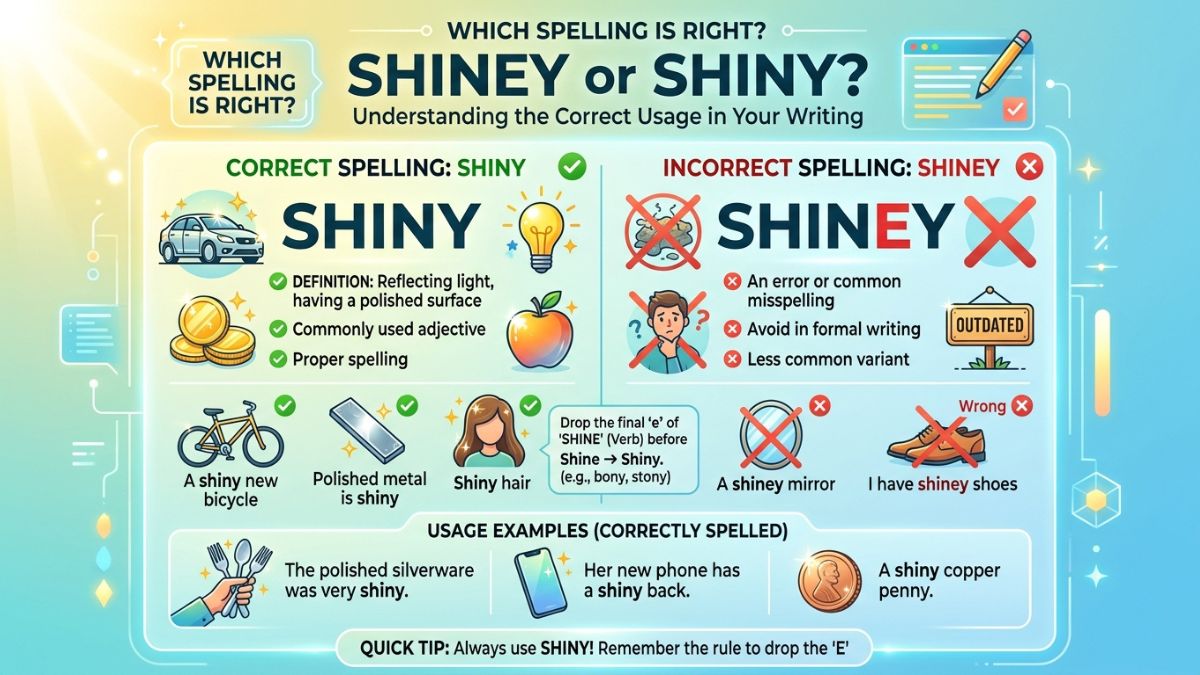
The words “shiney” and “shiny” often confuse writers. While both might appear in casual conversations, only one is correct in standard English. “Shiny” is the proper spelling. It describes something that reflects light or has a glossy surface, like freshly polished furniture or a sleek car. This adjective conveys brightness and allure.
On the other hand, “shiney” is not recognized as an official word in most dictionaries. It may pop up occasionally due to typographical errors or informal speech but lacks any formal acceptance. Understanding these distinctions aids clarity in writing. Using “shiny” correctly enhances your message while avoiding misunderstandings among readers. Embracing precise language elevates your communication skills significantly, ensuring you convey exactly what you intend without ambiguity.
Common mistakes in using
A frequent error is the confusion between “shiney” and “shiny.” Many people mistakenly believe that both spellings are correct. “Shiny” is the only accepted form in standard English. Despite this, some individuals use “shiney,” thinking it looks more visually appealing. Another common mistake arises when writers unknowingly blend these terms with other similar words like “glossy” or “luminous.” This leads to unclear writing and potential miscommunication.
Some might also fall into the trap of using “shiney” in informal contexts, thinking casual settings allow for flexibility with spelling. However, sticking to proper language rules enhances credibility. Being mindful of context helps avoid errors too. Using “shiny” correctly ensures your message shines clearly without distraction from typos or misspellings.
Tips for proper usage in writing
To ensure proper usage of “shiney” and “shiny,” start by remembering that only “shiny” is the correct spelling. Familiarize yourself with the word’s meaning: it refers to something reflecting light or appearing bright. This understanding will guide your writing. Consider using spell-check tools, but don’t rely solely on them. These tools may not always catch contextual errors, especially when dealing with similar-sounding words.
Read your sentences aloud. Hearing how they flow can help identify awkward phrasing or misused terms. When in doubt, consult a dictionary or reputable online resource for clarity on spelling and definitions. Practice makes perfect; the more you write, the better you’ll get at spotting common pitfalls like this one. Embrace feedback from peers to refine your skills further and enhance your understanding of word usage nuances.
Examples of correct usage
When it comes to using “shiny,” think about the surface of a polished car. You might say, “The shiny paint caught everyone’s eye.” This showcases something that reflects light beautifully. On the other hand, if you were to describe a playful puppy with an overly gleaming coat, you’d use “shiny” as well: “The golden retriever had a shiny fur coat after his bath.”
Consider another instance—when describing diamonds. You’d want to express their brilliance accurately: “The engagement ring sparkled with a shiny diamond.” Remember, though, that while some may mistakenly spell it as “shiney,” this is incorrect in standard English. Always opt for “shiny” when you want to convey brightness or reflectiveness in your writing. Using these examples will make your descriptions more vivid and precise.
Alternative words to use instead of
When searching for alternatives to “shiny,” consider using words like “gleaming” or “glittering.” These options capture a similar sense of brightness and allure. For a more subtle touch, try “lustrous” or “radiant.” Both convey an appealing sheen without being overly flashy. If you want to describe something that reflects light softly, the term “sheen” might be fitting. It evokes the image of a gentle glow rather than an overwhelming shine.
Another option is “polished,” which suggests not just brightness but also refinement and careful finishing. Each alternative carries its specific connotations, allowing you to choose one that best fits your context, whether it’s in writing about objects, experiences, or even emotions.
Conclusion:
When it comes to the words “shiney” and “shiny,” clarity is key. The correct spelling is “shiny,” which describes something that reflects light or has a lustrous appearance. Confusing these two terms can lead to misunderstandings in your writing, so it’s essential to be aware of their differences.
Mistakes often arise from mishearing or mistyping “shiny.” Many writers inadvertently type “shiney” due to its phonetic similarity. To avoid this, always double-check your work or utilize spell check tools when drafting content.
For proper usage, remember that “shiny” works well in various contexts: describing cars, polished surfaces, or even a person’s hair after applying product. It’s best used as an adjective rather than trying to create variations like “shiney.”
If you seek alternatives for more varied expression, consider using words such as glistening, gleaming, radiant, or lustrous. These synonyms can enhance your descriptions while avoiding repetition.